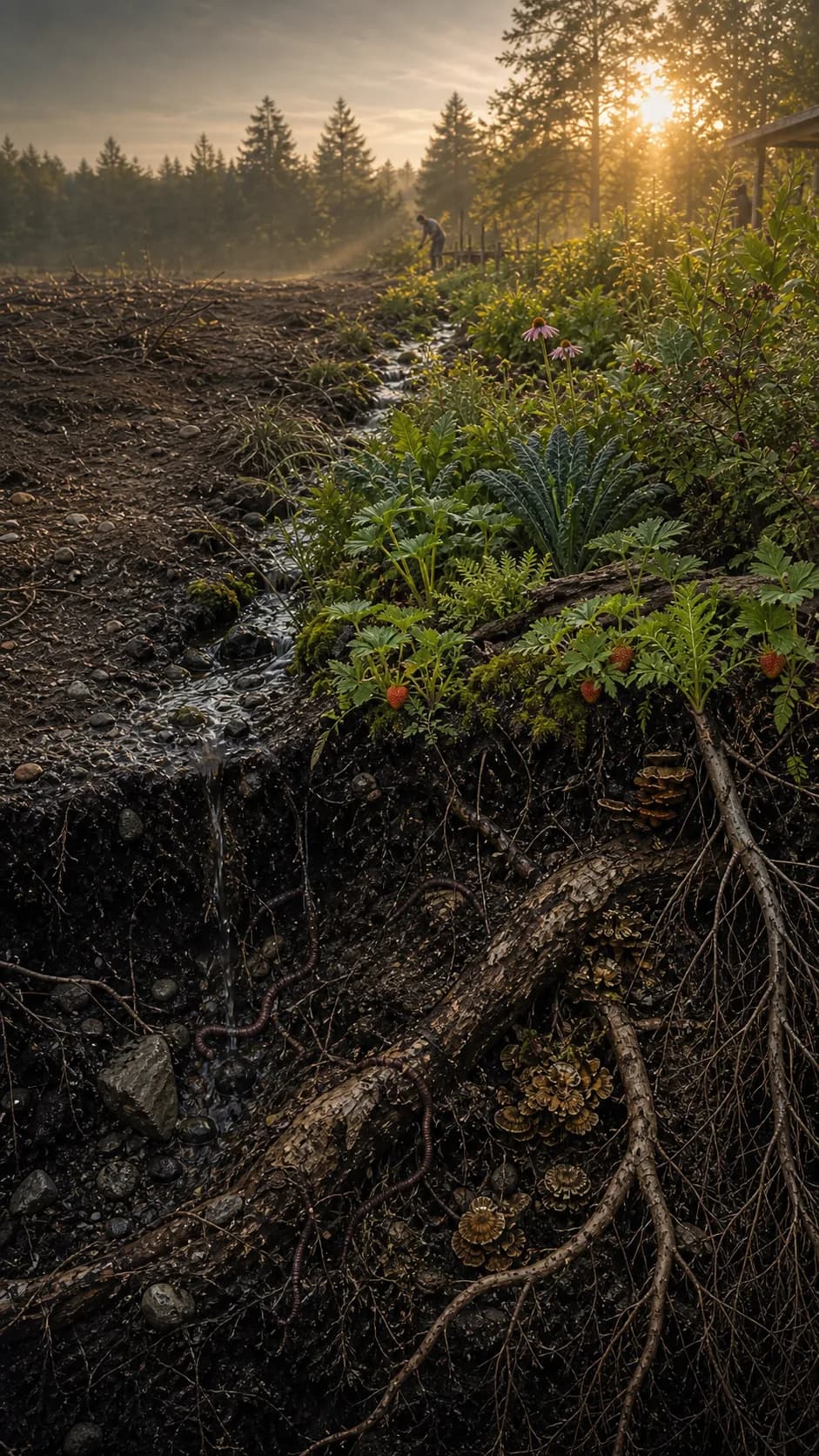
1.5 metres down
We build landscapes from the ground up.
Roots, fungi, stone, and slow water, working in the dark. Every orchard and every shade tree you'll ever stand under begins down here.
Scroll to rise toward the light
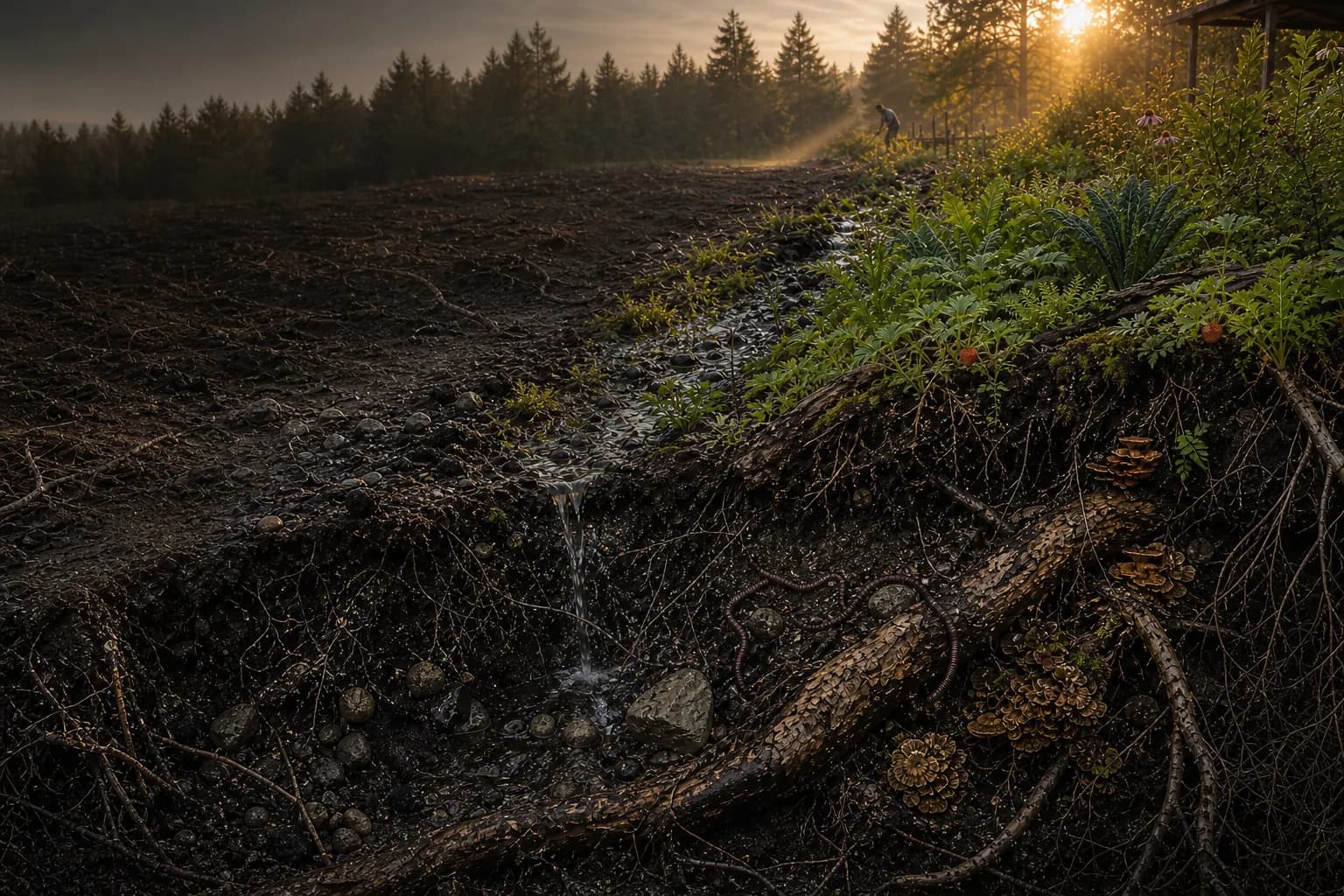
1.5 metres down
Roots, fungi, stone, and slow water, working in the dark. Every orchard and every shade tree you'll ever stand under begins down here.
Scroll to rise toward the light
The surface
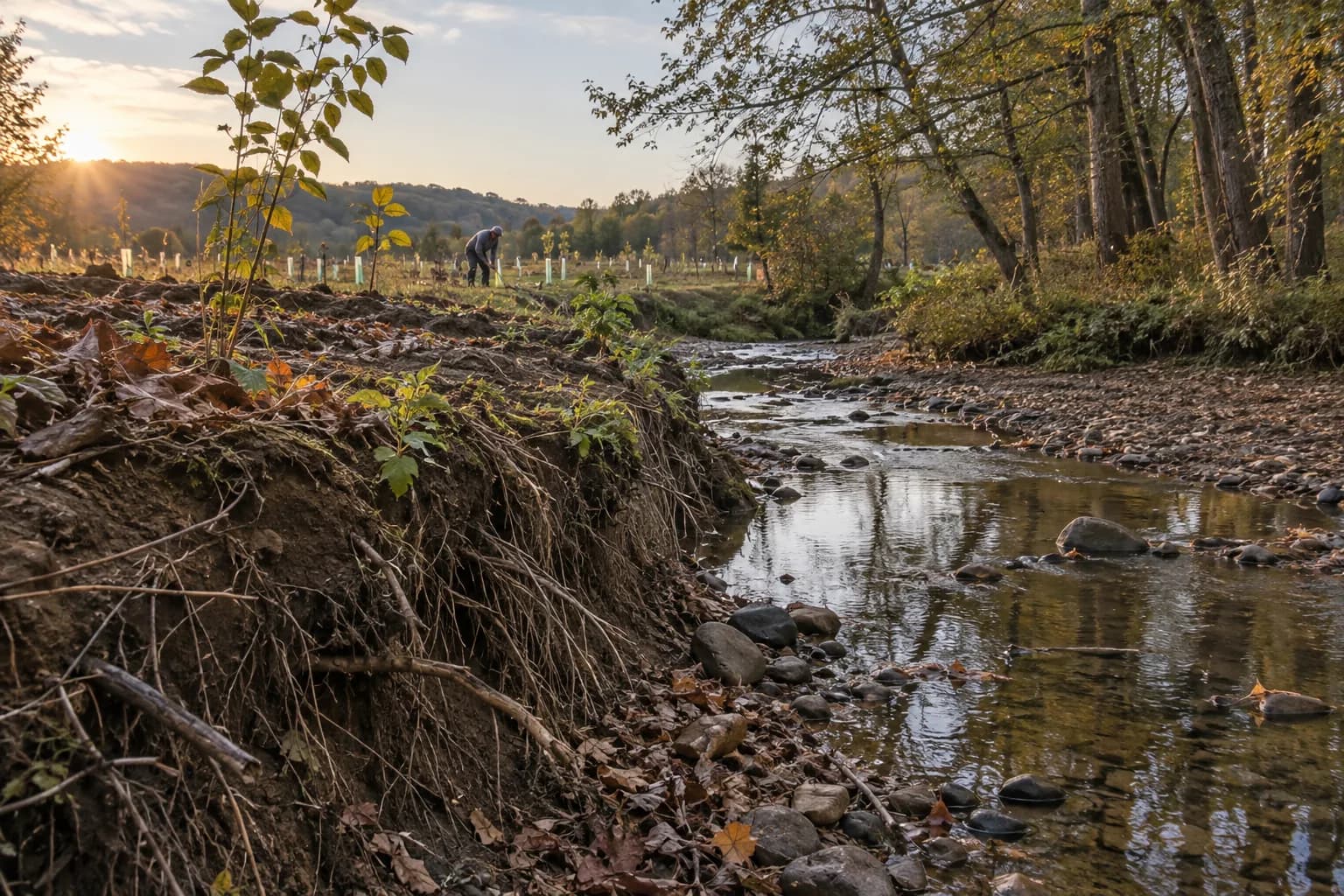
Same soil, same rain. Where the ground is covered, roots dive deep and the rain sinks in. Where it's bare, the sun bakes it and the storm carries it off.
Year 0
Every hard rain strips a little more topsoil into the creek. This is where most land starts. It doesn't have to stay here.
Year 1
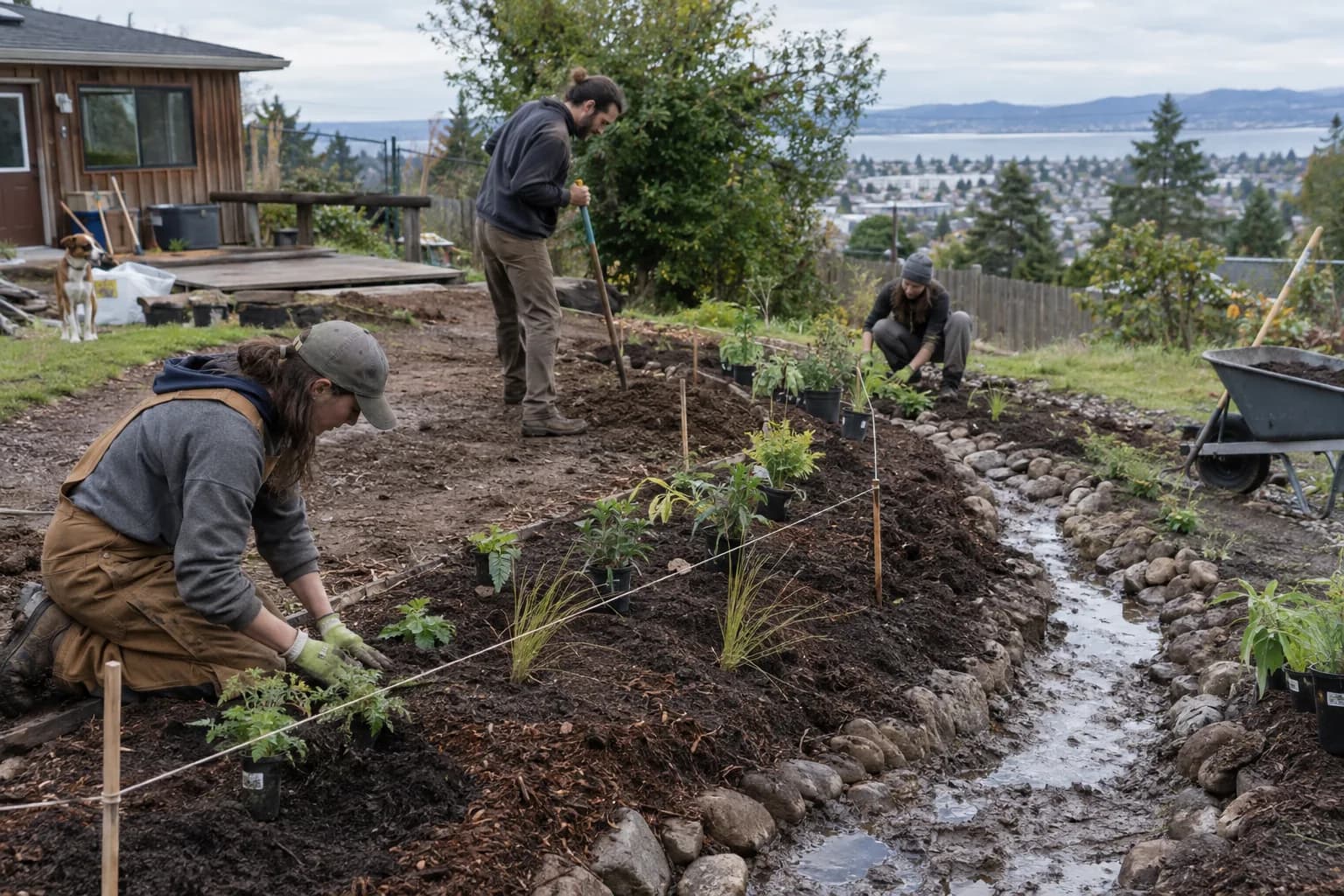
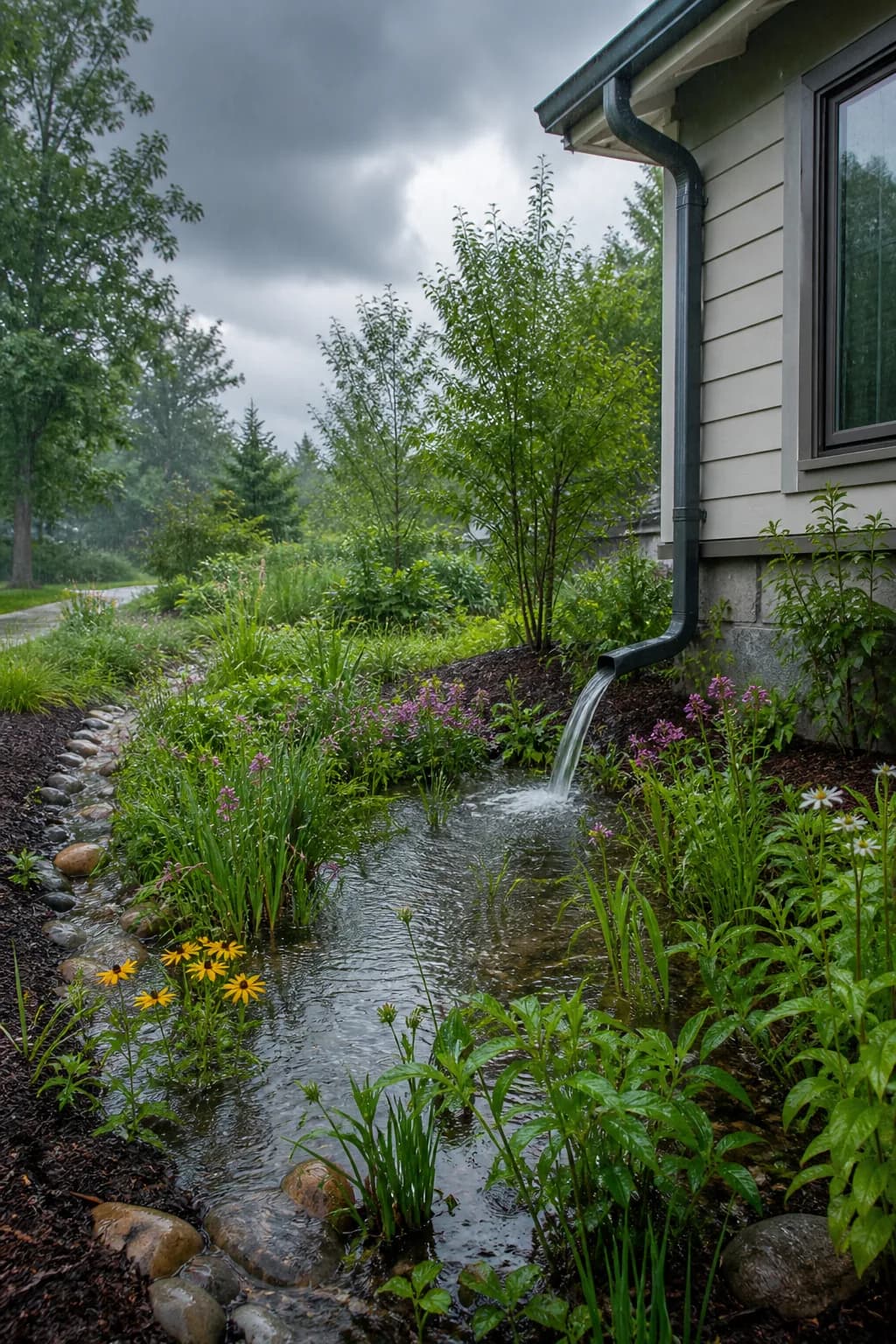
We dig swales along the contour and plant them the same week, so the rain stops, spreads, and sinks in.
Year 3
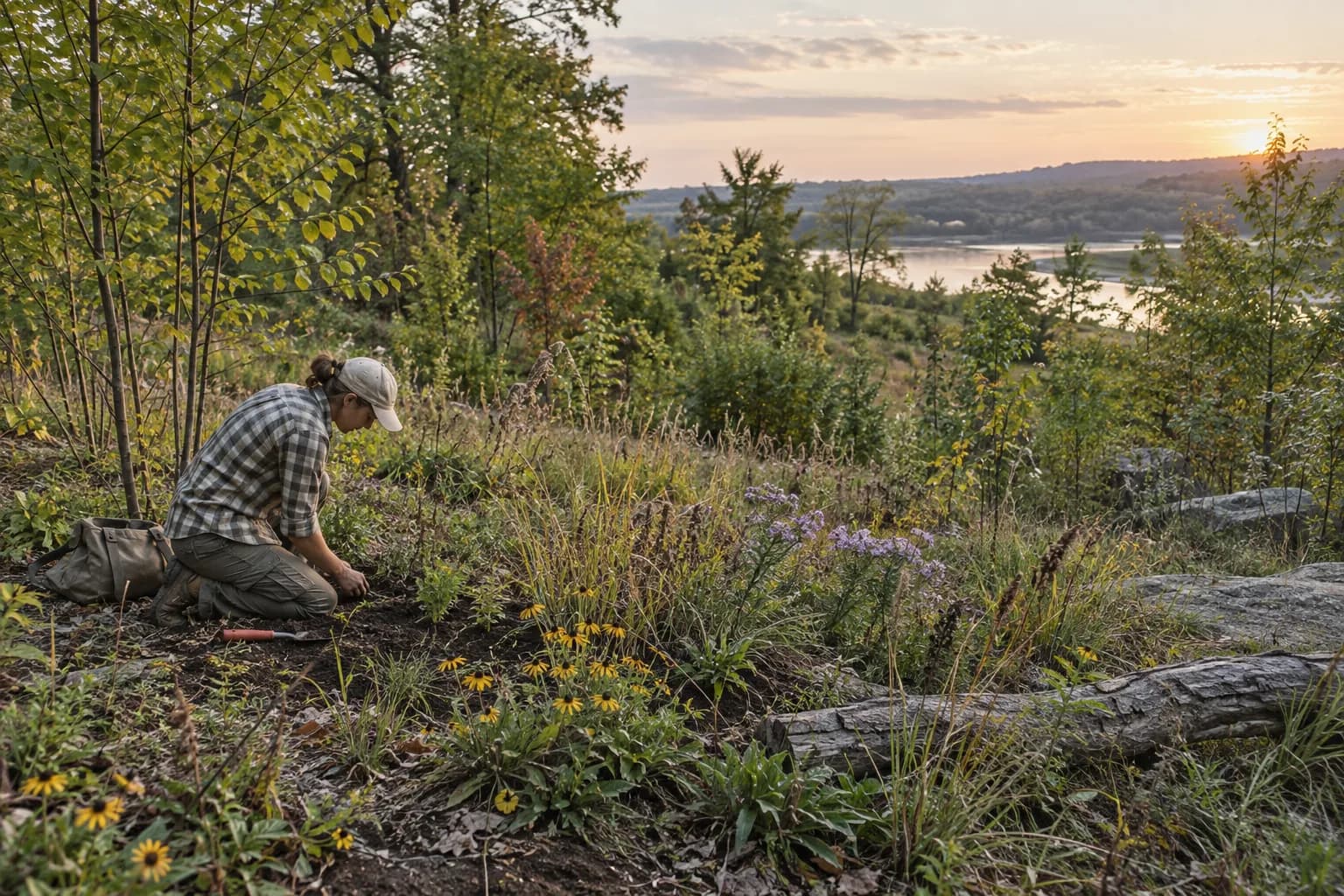
Natives, ground covers, and nitrogen-fixers go in around the young trees. Bare soil is the enemy.
Year 5
The creek runs clearer. Paths get worn in. The beds stay damp through August.
Year 8
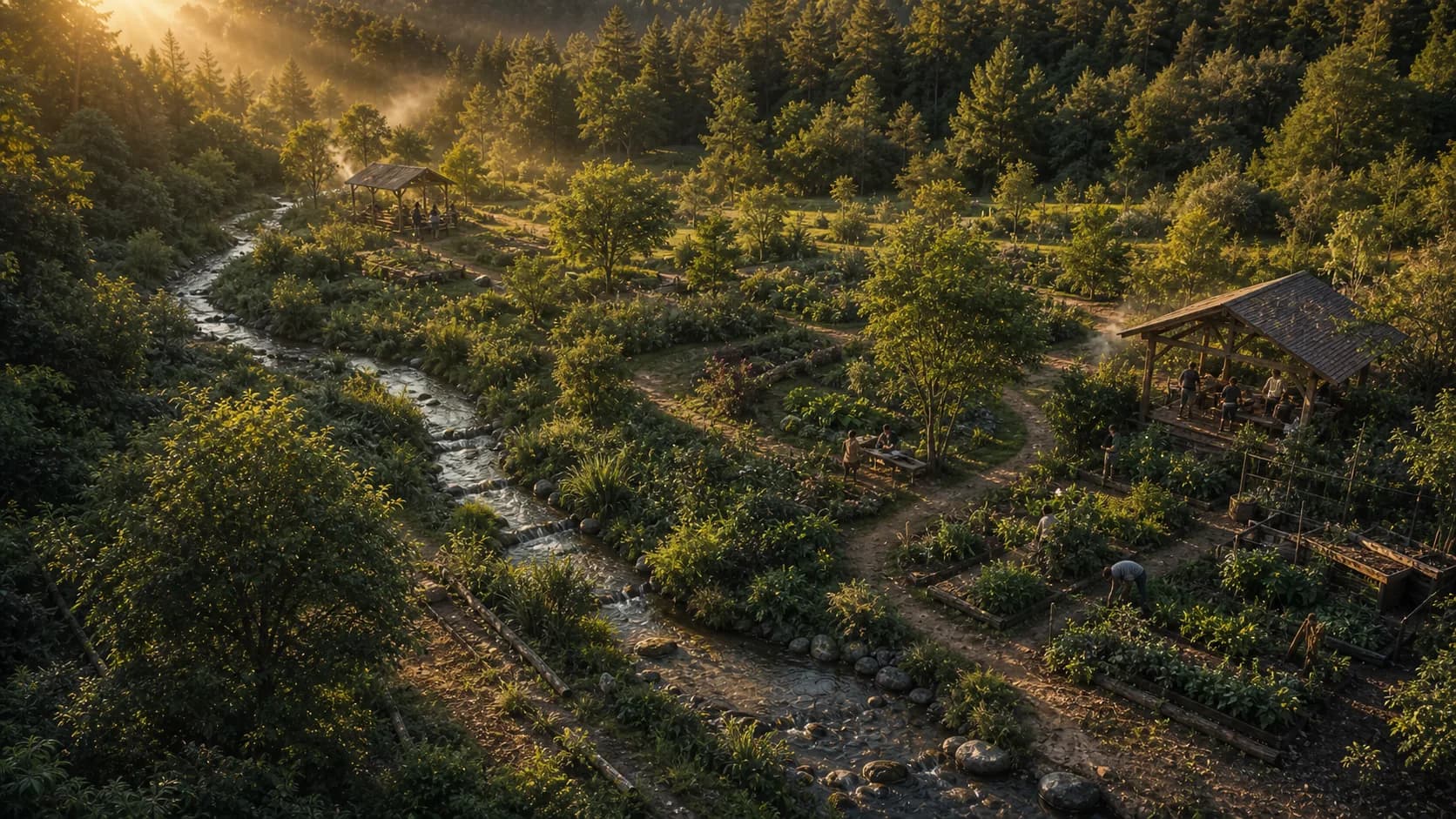
Canopy, shrubs, herbs, ground covers. A food forest looks messy up close and organized from above.
Year 10
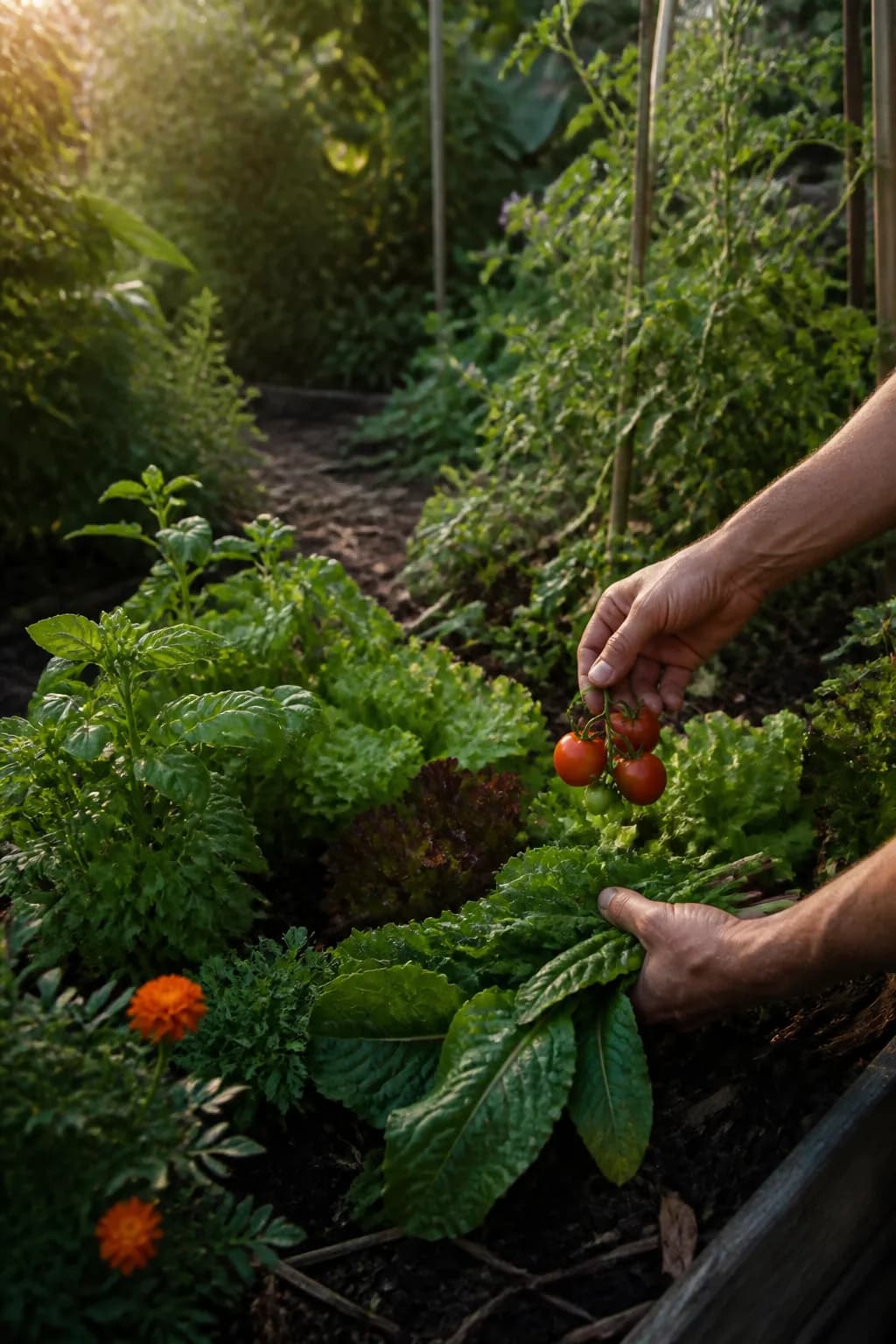
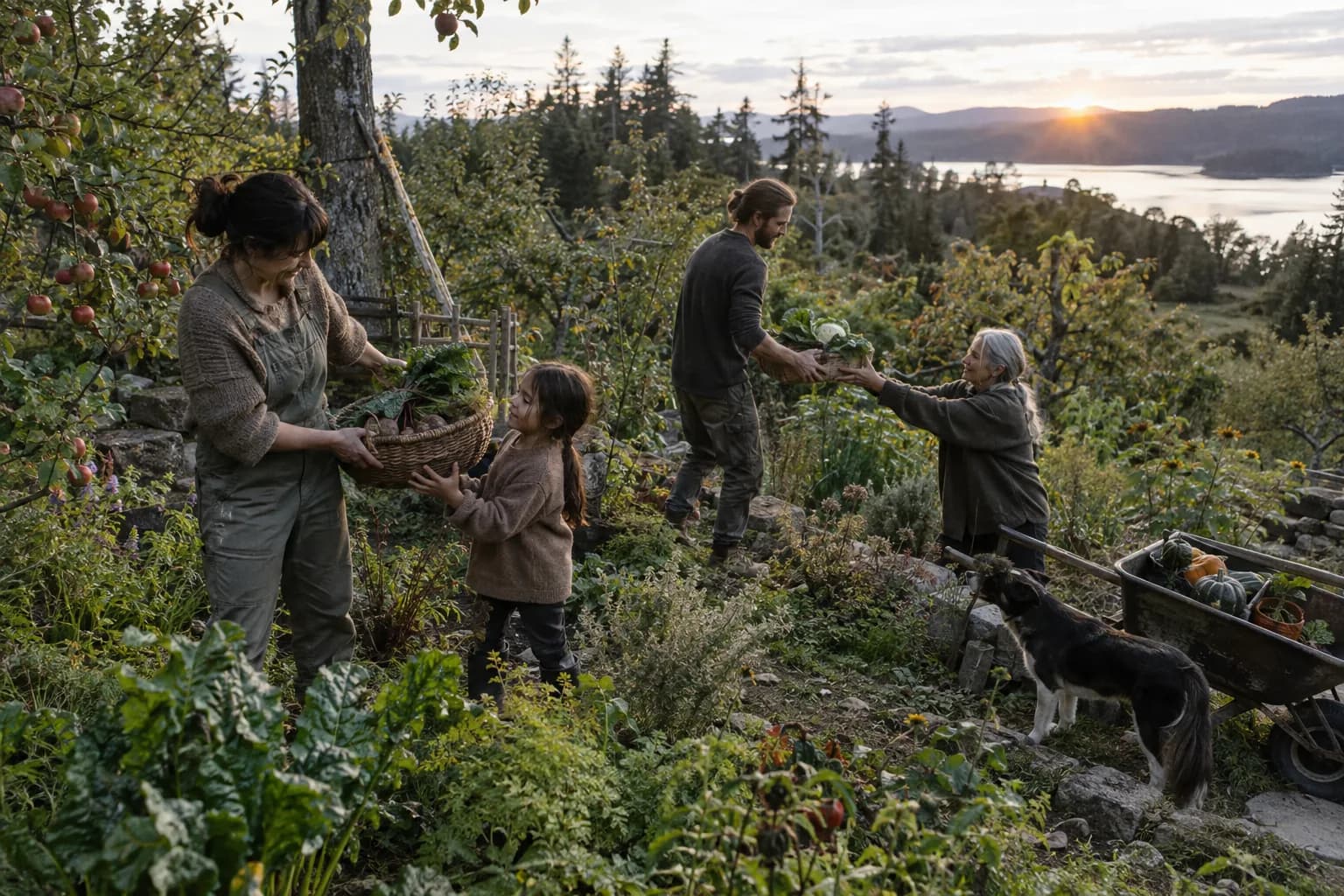
Apples warm from the sun, greens, roots, herbs. Picked by the hands that planted them.
Year 10
That's what we work toward on every site: land that feeds people, holds the rain, and hums with wildlife again.
Consultation and design across the United States. Installation is confirmed once we know your site, the season, permits, and local crews.
Where most projects start
We put every tree, path, and garden bed where it does more than one job, and where you can actually keep up with it.
Food Forests
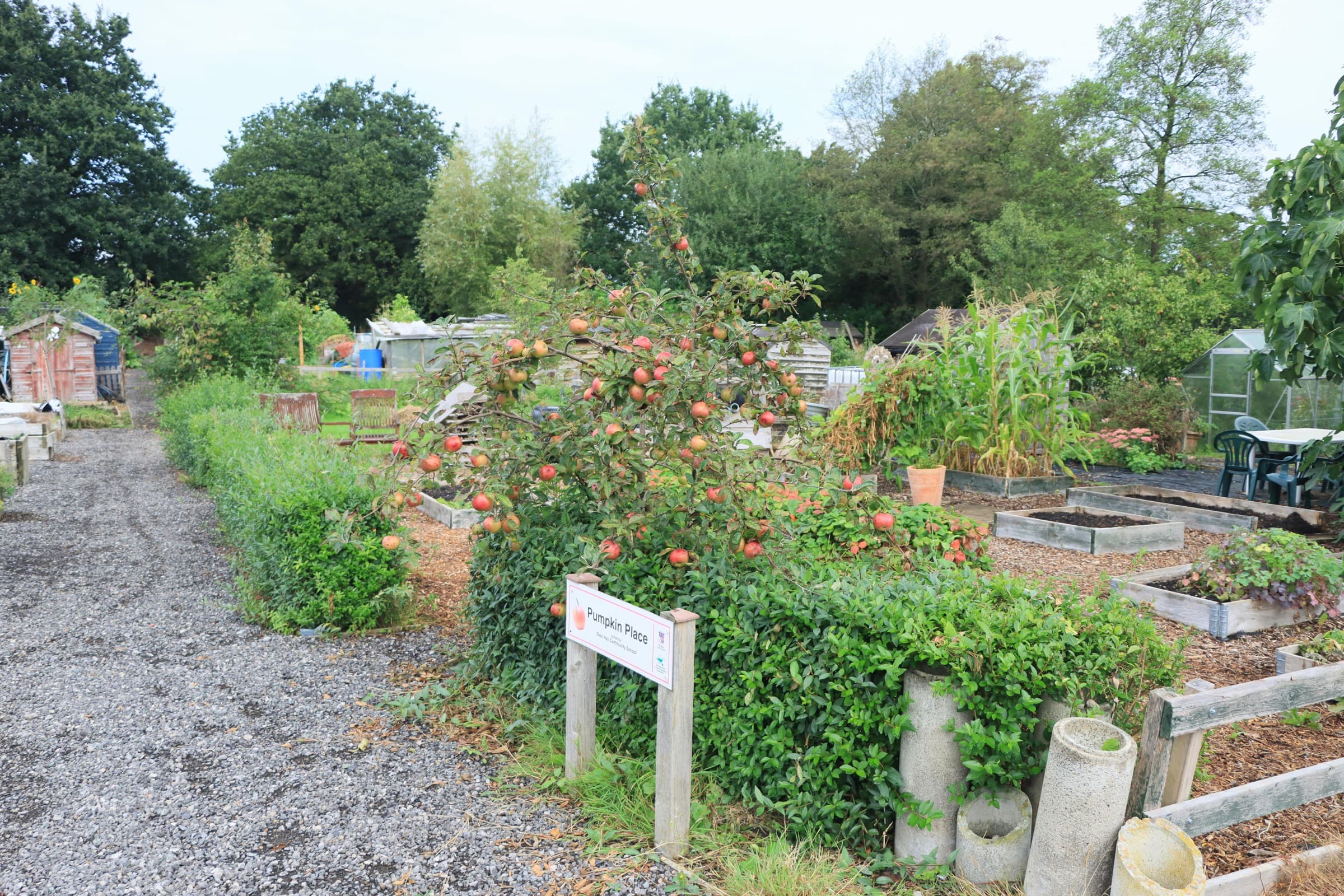
Trees, shrubs, vines, herbs, and ground covers stacked like the edge of a woods. Fruit overhead, berries at hand height, and soil that stays cool and covered underfoot.
More on food forests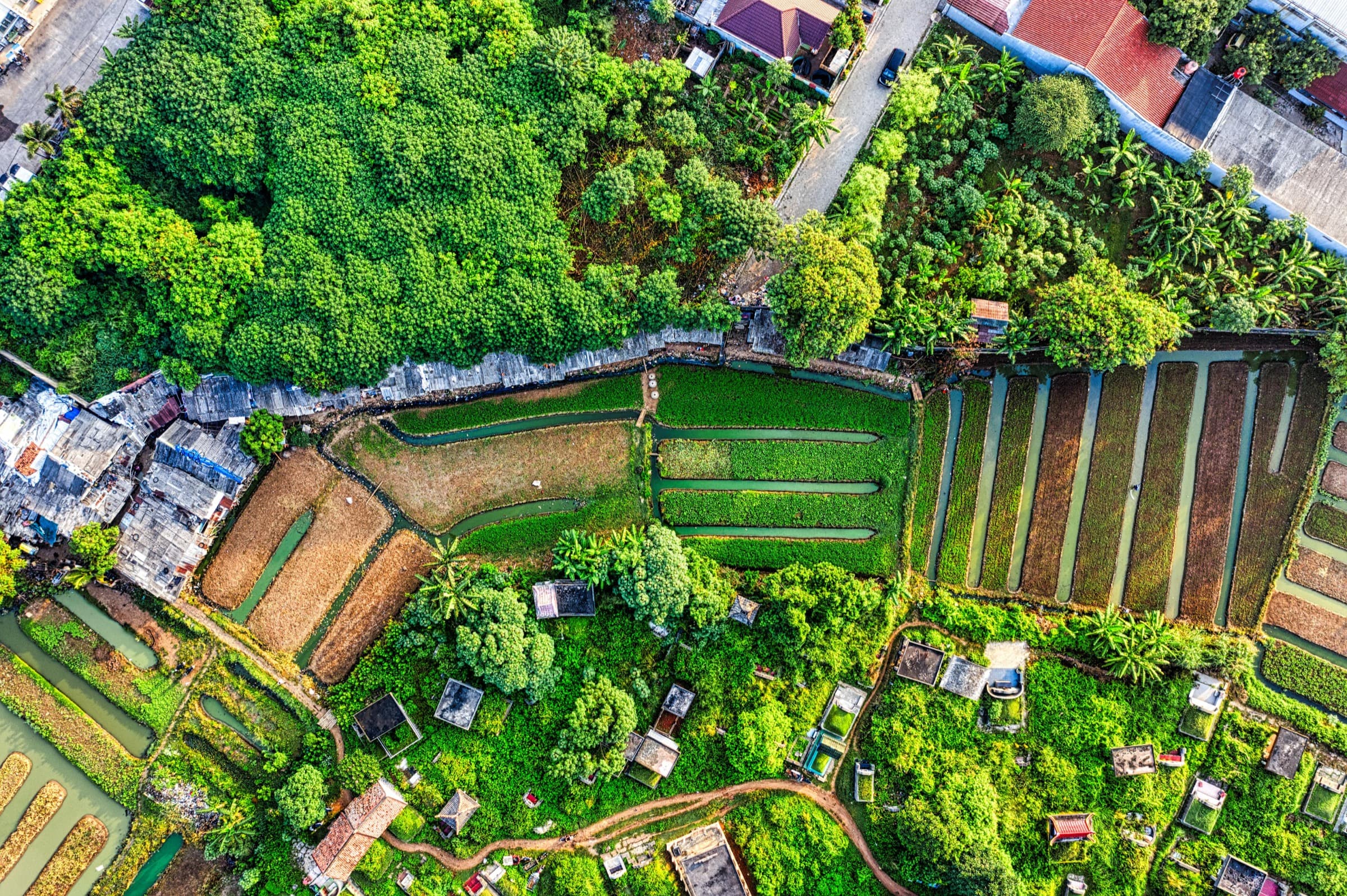
Permaculture Systems
We place water, paths, compost, and gardens so you walk less, haul less, and the whole place is easier to look after.
More on permaculture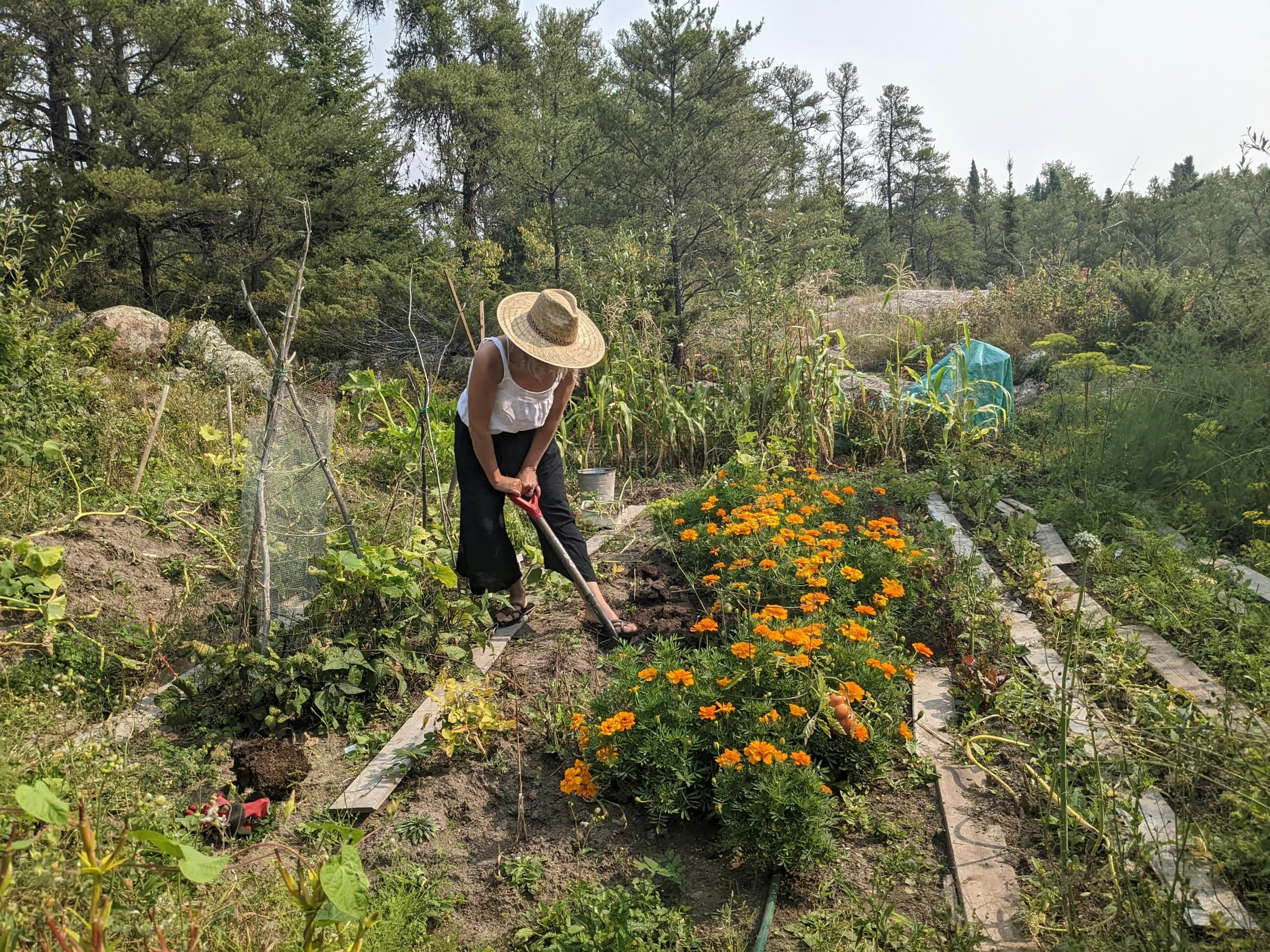
Native Ecosystems
Most plant-eating insects can eat only the plants they evolved with, and songbirds raise their young on those insects. Native plants put that food back.
Bring back native plantsHow we work
Every piece of land comes with people attached. We sit down with you and ask a lot of questions: what you want this place to do, what frustrates you about it now, and what you'd never change.
Land is never a blank page. We walk the site slowly and more than once: where water runs and pools after a storm, where shade falls in July, what the soil is like, what's already growing, and which animals use the place.
A good design is mostly decisions about relationships. We turn what we found into a plan: what goes where, what to plant, how water moves, where people walk, and how much upkeep you can honestly handle.
Timing is half of planting. We put it in the ground, sequencing jobs and materials around the weather and site conditions, and working around the plants and wildlife already living there.
A landscape is never finished, because it's alive. We come back to see what took off, what struggled, and what didn't make it, and we adjust.
Where do you fit?
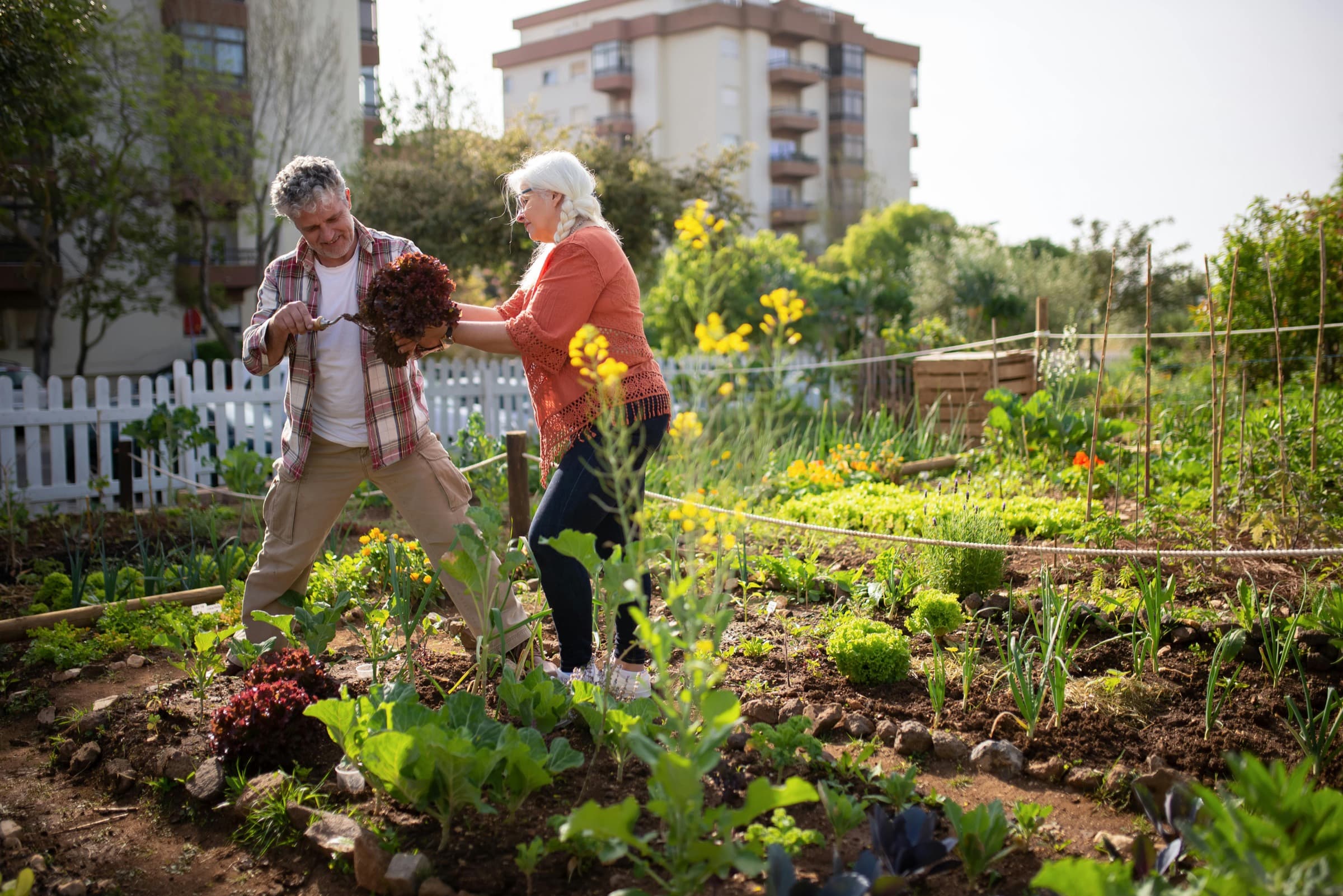
Your yard, homestead, or farm, shaped around the life you want to live on it.
A school or community spaceA schoolyard, church lot, or corner lot where kids pick berries and neighbors meet over the harvest.
Request a consultationWe walk your land beside you and tell you what we see, and what it could become.
Explore a partnershipYou've got land, know-how, materials, or people, and you want to team up.
Ready when you are
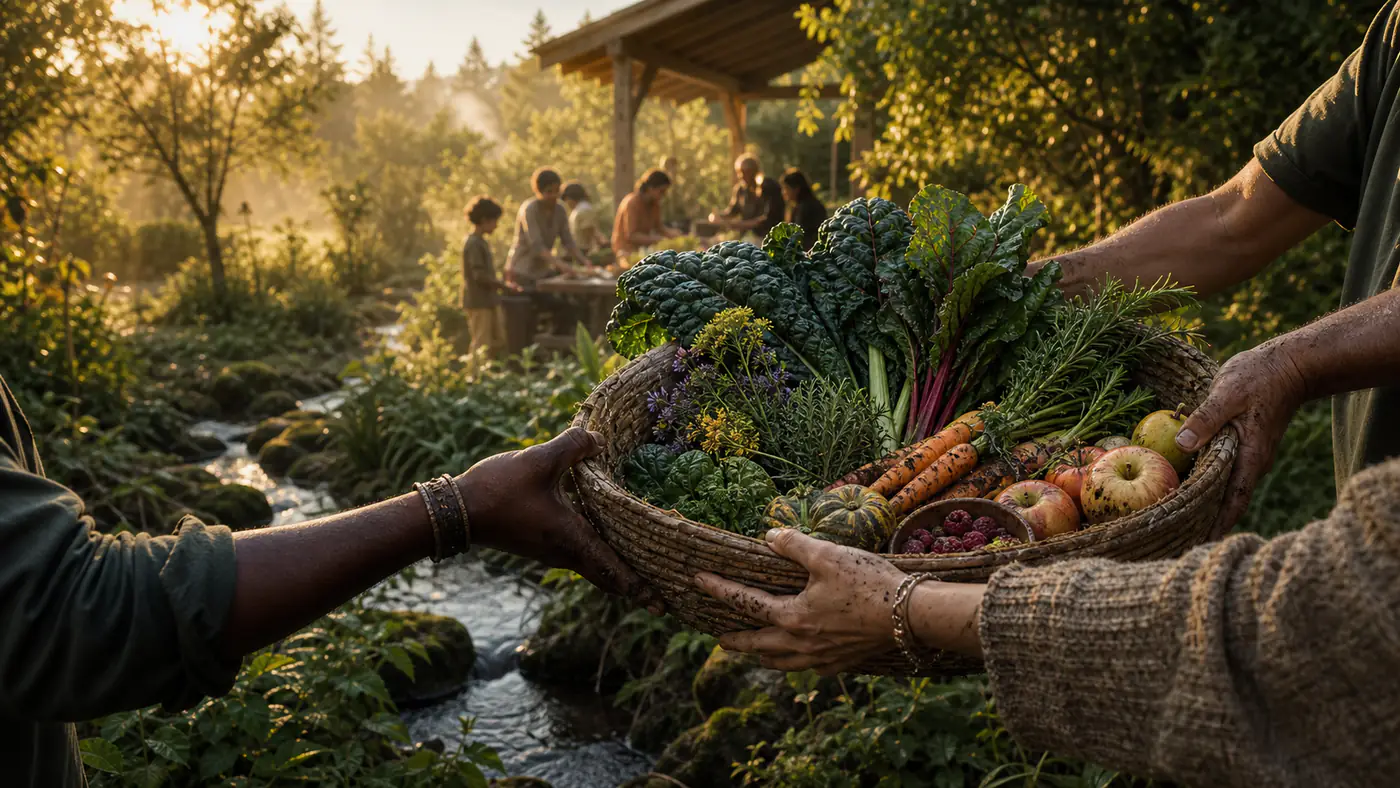
A backyard, a farm, a schoolyard. Tell us where it is and what you picture there, and we'll walk it with you.
Start Your Project