Skip to content
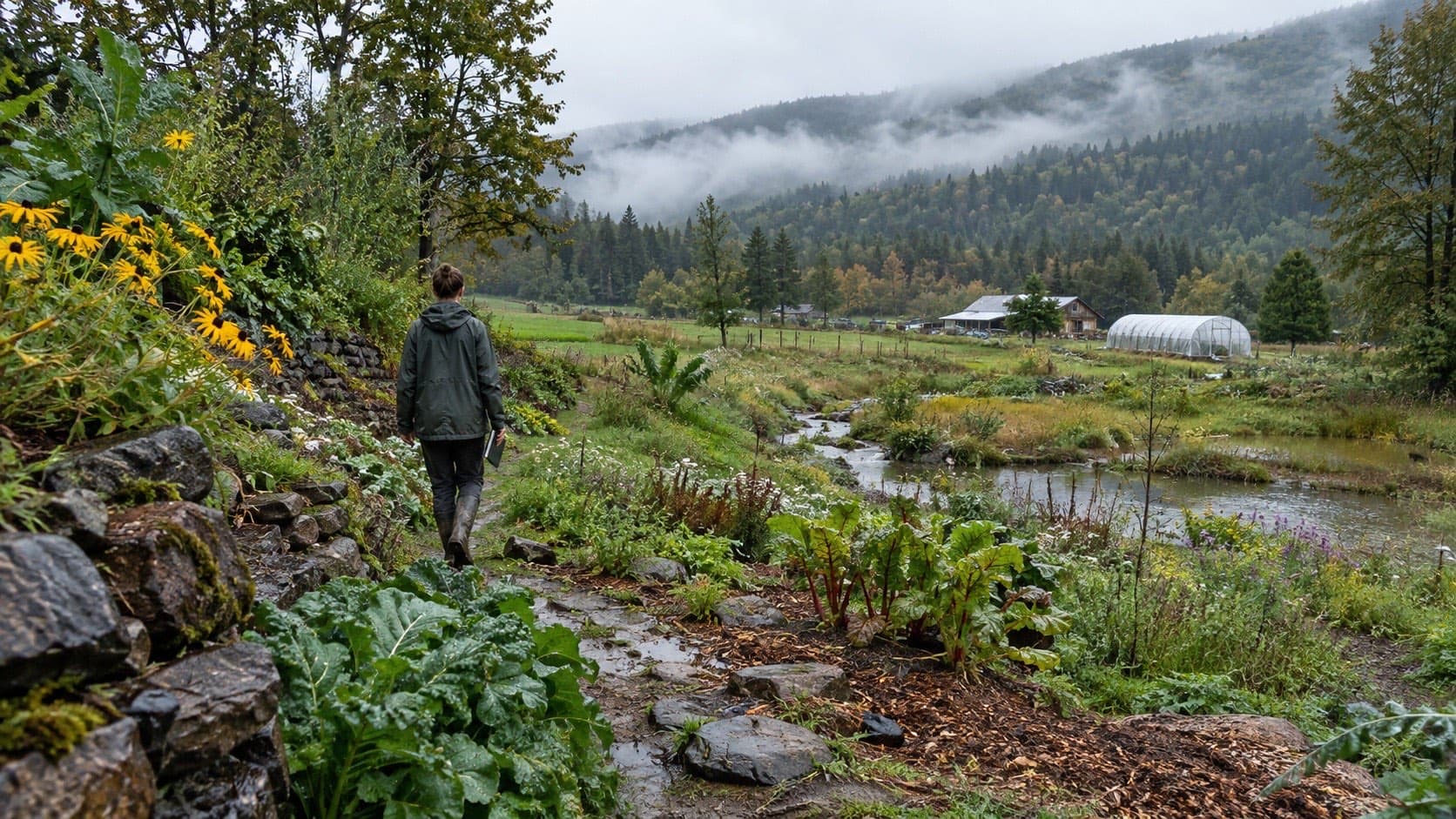
A field observer walking through a regenerative landscape after rain

How to read your land

Your land is already talking. Learn to listen.

Four simple things you can do on your own land: follow the water, check the soil, see what's living there, and come back each season to see what changed.

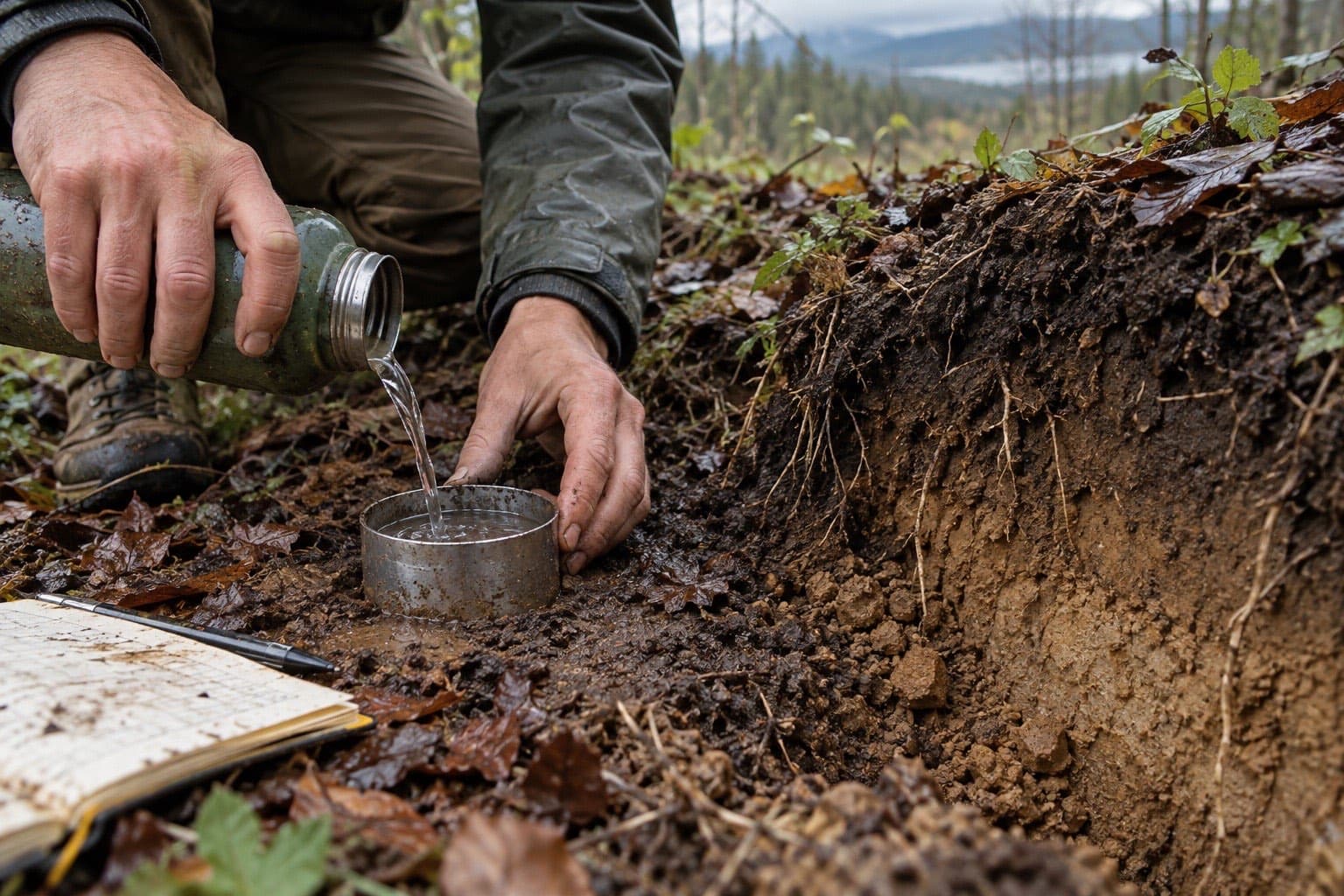
Hands observing water infiltration beside a soil profile after rain

Chapter 01

Soil + water

Reading the Ground

How water behaves on your land depends on the soil, how packed down it is, how much of it is covered, and the slope. Look during dry weather and again after a rain before you decide anything. One visit isn't enough.

Questions to take outside

  • Where does water soak in, collect, or move quickly after rain?
  • Where is the soil covered, bare, loose, crusted, or compacted?
  • How is the soil different on a high spot, a low spot, and under the plants?
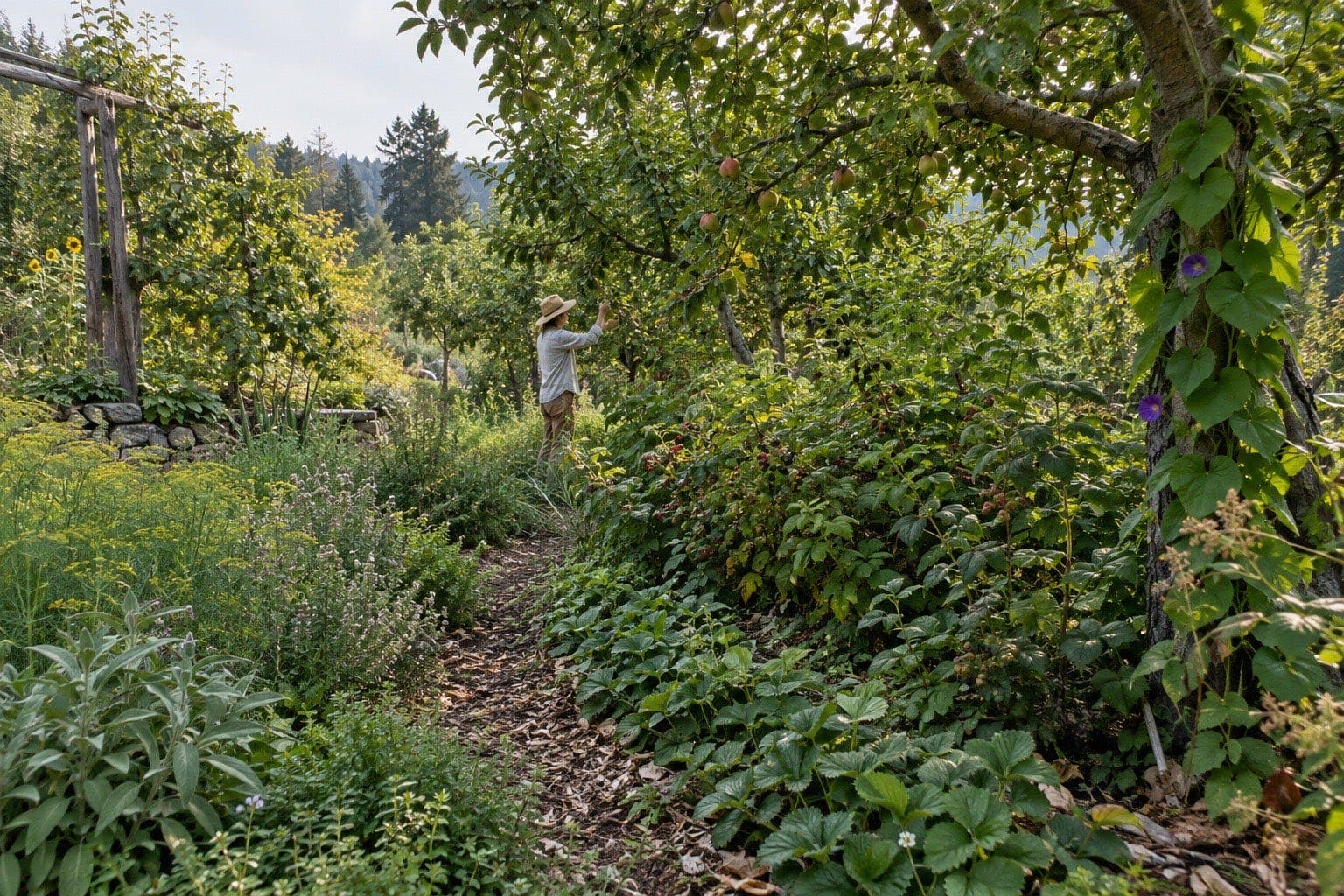
A caretaker working among the layered plants of a mature food forest

Chapter 02

Food forests

Designing in Layers

A food forest stacks trees, shrubs, smaller plants, ground covers, root crops, and vines in the same space. What works depends on your climate, how big the plants get, light, water, soil, how you'll get around, and how much care you can give it.

Questions to take outside

  • How does the sun move across your land during the day, and through the year?
  • Which plants might fight over the same light, root space, water, or path?
  • Where could one plant shelter, feed, or support another without getting in your way?
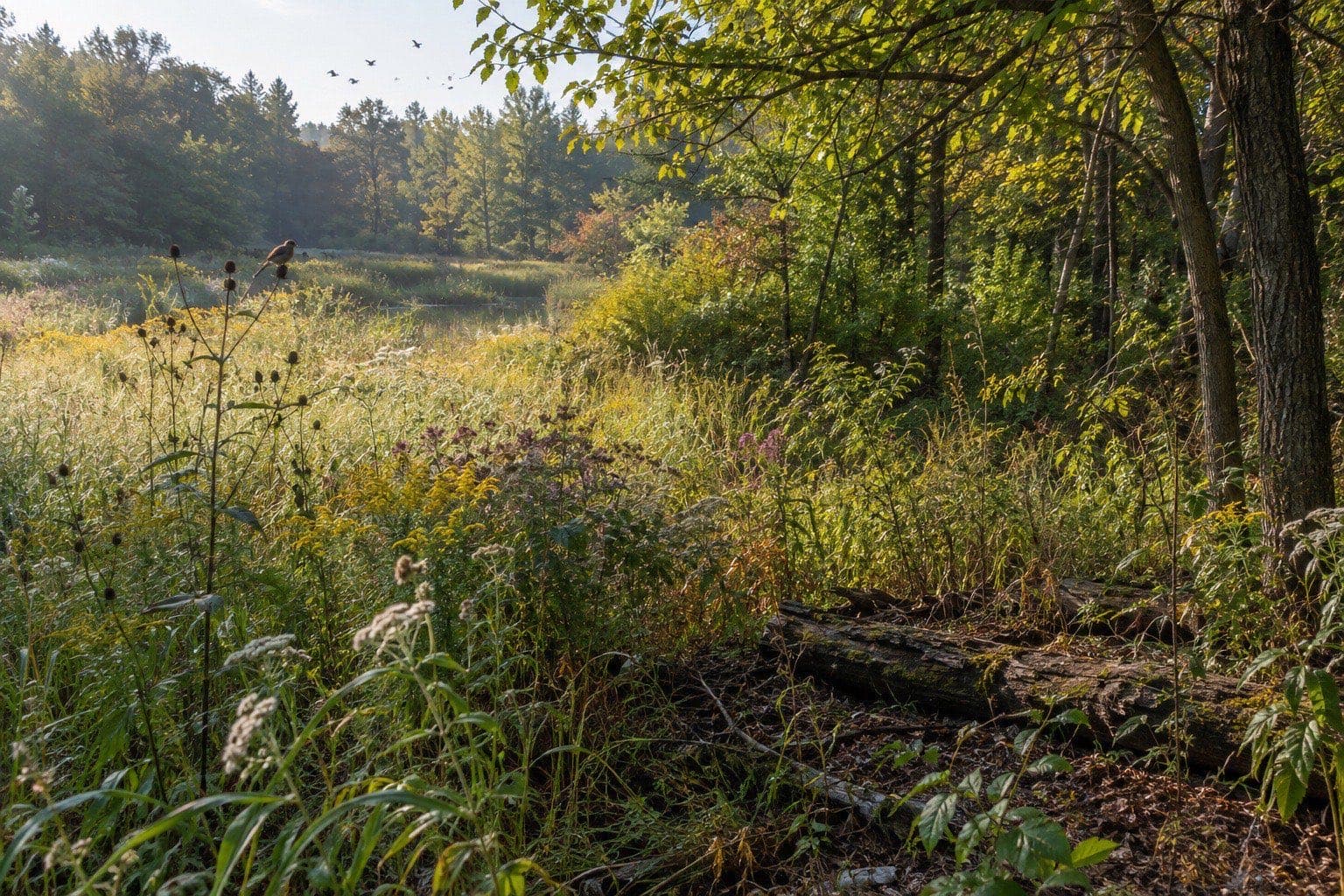
A native meadow meeting a woodland edge in morning light

Chapter 03

Native ecosystems

Growing Local Relationships

Native plants have grown alongside your local soil, weather, insects, and birds for a very long time. But they still have to suit your exact spot: how wet, how sunny, how much room, and how often it gets disturbed.

Questions to take outside

  • Which plants, bugs, birds, or mushrooms show up at different times of year?
  • Where do shade, wet spots, wind, and foot traffic make little pockets that feel different?
  • Which local native plants fit those spots and the care you can give them?
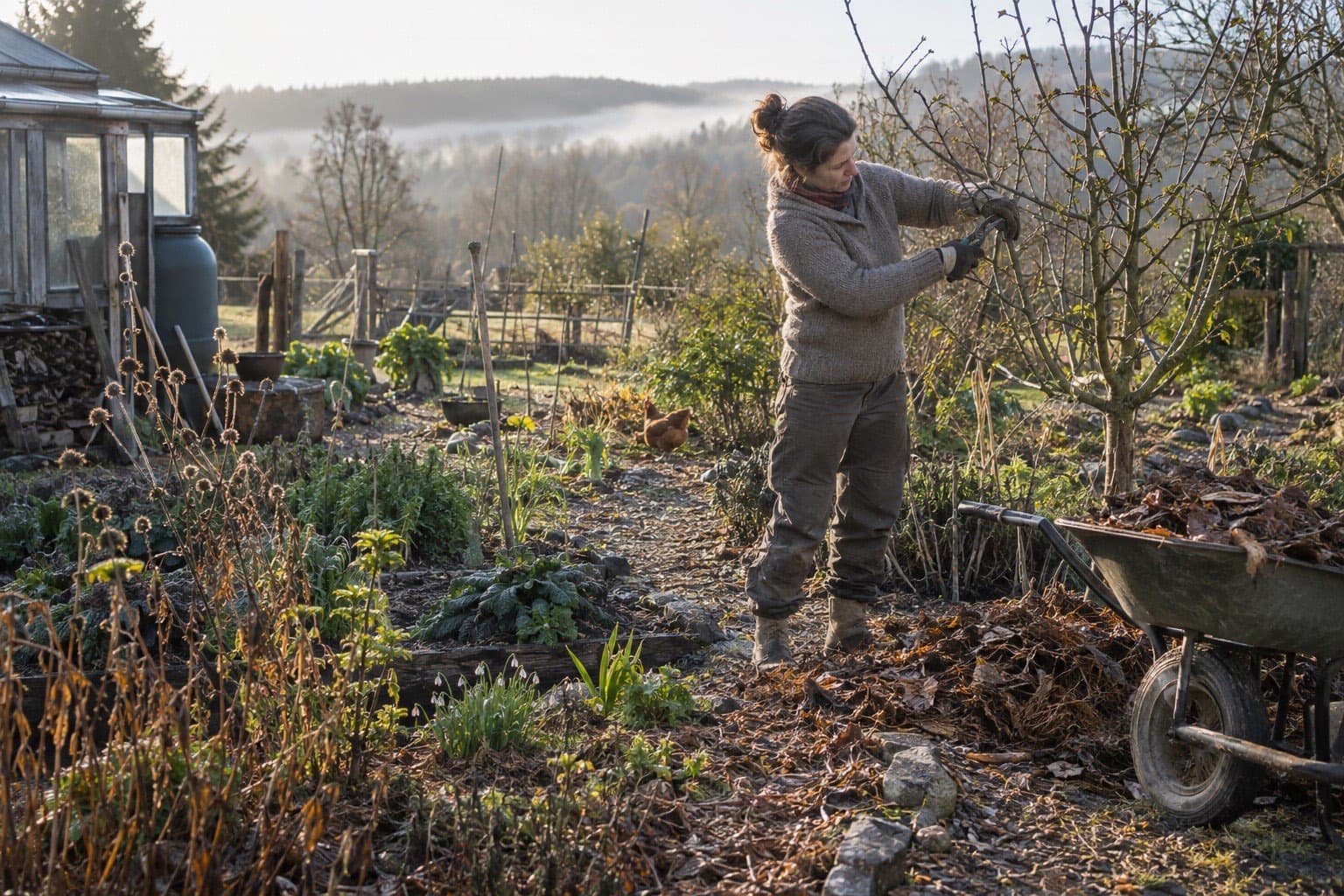
A caretaker pruning and mulching an established garden between seasons

Chapter 04

Stewardship

Caring for What Comes Next

Land keeps changing as plants grow in, the weather shifts, new creatures move in, and the way people use it changes. Checking in regularly helps you catch stress, crowding, or erosion early, while it's still easy to fix.

Questions to take outside

  • What's doing well, struggling, spreading, or gone since you last looked?
  • Which chores are seasonal, and who can realistically keep doing them?
  • How would you tell a one-time change from a pattern that needs attention?

Keep checking back

The land changes. So should the answer.

Jot down what you see after rain, during dry spells, in the heat, and in winter. Whatever keeps happening is a pattern. Whatever changes is telling you something.

See our field guides